Wednesday, August 5
Tuesday, July 14
The Performative Virtue Preening Of Cornel West's Redistributionism
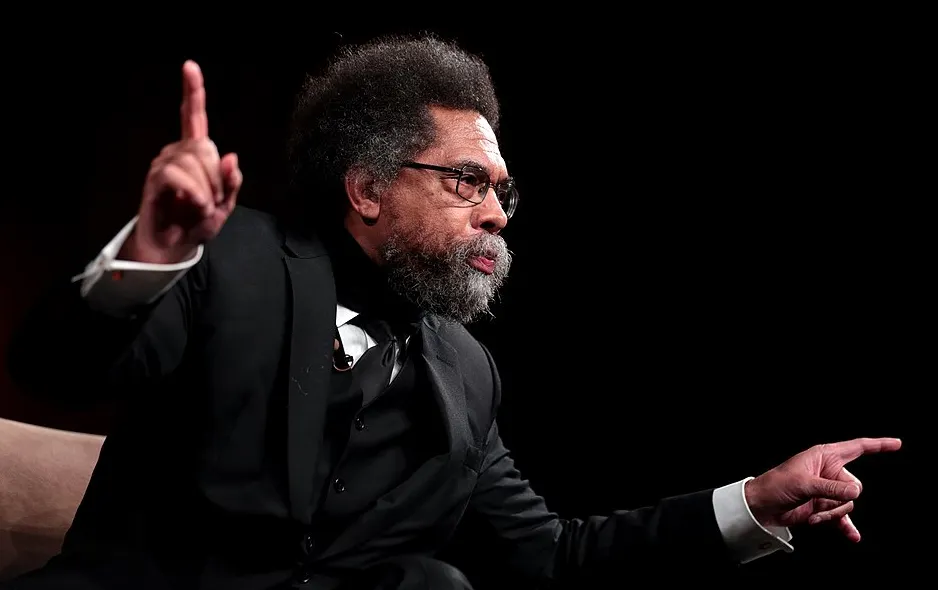
Cornel West in a social media post wrote, “To my dear brother Eric Adams, my dear brother Zohran Mamdani has got it right! Based on Acts 2:45 and Acts 4:35, a call to abolish poverty and redistribute wealth downwards is a moral and spiritual matter. In this way, Karl Marx is building on a rich prophetic tradition of Jerusalem shot through the best of Judaism, Christianity, and Islam.”
The texts referenced by Professor West document the practice in the early church where Christians freely shared of their bounty to assist the less fortunate among their number.
According to West's interpretation, this is the source's dictum referenced by Zohran Mamdami in a tweet posted 5/27/20 reading “Each according to their need, each according to their ability.”
For supposedly being one of America's foremost public intellectuals, West's exegesis is disturbingly incomplete.
For starters, these particular scriptural texts are descriptive in that these passages detail what these particular believers did.
The actions are not extolled as binding upon all Christians in every conceivable circumstance.
While the narrative can inspire emulation, other admonitions in the same book extolled by West clarify that not everyone is obligated to respond with the same degree of eleemosynary.
If Professor West had not allowed his grandiose virtue signaling to get in the way of his study of the Scriptures, he would have encountered the account of Ananias and Saphirra.
In the anecdote of the couple struck dead not for financial avarice but rather for deliberate deception in the hopes of gaining the sort of public acclaim of which Dr. West is himself a connoisseur, the Apostle Peter explains that the proceeds raised from the sale of their land was their's to do with as they pleased so long as they did not make a spectacle.
Yet the Marxism, celebrated by West as a rudiment of divine revelation despite Marx ranking as a foremost blasphemer and his ideology being a justification for religious persecution on the part of regime's built upon his thought, does not grant any freedom like Peter the Apostle did as to whether or not the individual participates in these income redistribution campaigns.
For example, Zohran Mamdani is on the record as proposing that White neighborhoods ought to pay higher taxes than jurisdictions populated by residents of other phenotypes.
So if the form of wealth redistribution advocated by Mamdani is a Biblical one, as Dr. West assures by his accumulated knowledge in the realm of religious studies, then a Mamdani administration would have no issue with Whites refusing to comply with these punitive assessments.
It is revealing to the extent to which West advocates despotic intervention in the lives of citizens when it comes to confiscatory asset seizure in the name of religion.
Yet as a reflexive progressive, West would probably recoil in horror at the mere suggestion that the rights enjoyed by free people do not stem from the state but rather as a gift imbued by God as an inherent part of being made in the Creator's image.
Despite his considerable ballyhooing about the ethical beauty of invoking the threat of force in the name of resource redistribution in pursuit of radical egalitarianism, Professor West is as capitalist as anybody else when it comes to jockeying for his own economic advantage with the least amount of effort possible.
Something of an academic diva, Professor West is not so much about what is best for the discipline he espouses or even his students.
First and foremost, Cornel West is about what is best for Cornel West.
For example, rather than picking a single Ivy League institution and dedicating his life to it for the benefit of the student body and the expansion of human knowledge, Dr. West bounces back and forth clamoring for position and individual recognition.
Such is not idle speculation that cannot be backed up with evidence.
In a high-profile dispute with the then-president of Harvard Lawrence Summers documented by sources no less esteemed by the circles in which West attempts to ply the racial guilt from which he finances his posh lifestyle such as the New York Times and the Associated Press, the celebrity academic was accused of ditching classes and failing to produce serious scholarship in favor of more “financially lucrative” projects such as a spoken-word CD.
So apparently Dr. West thinks that he should not only be able to accumulate wealth but also keep it for himself.
It must be remembered that West is something of a preening virtue signaler in not only condemning those doing so as capitalists but also condemning those not eager to do so for violating key tenets of the Gospel message.
For it seems giving away other people's money is one of the few allegedly Biblical virtues that Professor West vocalizes any degree of enthusiasm in support of.
From texts such as Luke 16:18 and I Corinthians 7:15, those unlike Dr. West who are not educated beyond the point of wisdom and common sense come away with the impression that God is not really all that keen on most of those having gotten a divorce getting remarried while the former spouse is still alive.
After all, Malachi 2:16 informs that God hates divorce.
Yet God is also a forgiving God.
With fallen people and societies already hobbling through life as it is, nearly all but the most hardline of Christians and congregations are willing to overlook failed marriages in the lives of fellow believers so long as some harsh lessons are learned from the heartache and such souls go on to make betters lives for themselves should they find love again.
But despite his knack for education, it seems Cornel West has learned very little in this regard. For it seems this otherwise homely academic that women would otherwise recoil in revulsion from if he did not labor in a vocation that afforded him a degree of celebrity has been able to pull off five marriages interspersed between four divorces.
Among the circles in which Cornel West orbits, if one proves useful to the elites undermining sound tradition and good morals, such wanton libertinism is not frowned upon. Secularist education has often been at the forefront of encouraging the erotic exploration of almost every bodily orifice in nearly every possible permutation of titillating stimulation.
Sophisticates might posture so as to overlook shortcomings such as carnal promiscuity. However, it cannot be overlooked that a number of liaisons and concubines accuse West of abandoning the children resulting from these dalliances when much of West's public persona is predicated on his vocal concern for those marginalized and neglected as a result of what he critiques as a free market economy run amok.
Yet another common tactic to divert attention from what is the scandal of a father abandoning his children --- a number seemingly sired with women he was never married to --- is the invocation of the adage of let he who is without sin cast the first stone.
By this, it is meant that most in one way or another have led less than exemplary lives in regards to relationships, matters of the heart or even family. For these concerns rank among the most subjective aspects of all of human existence.
Though it falls woefully short of the stated public objective, unlike the vagaries of human romantic and erotic impulses, the United States tax code is alleged to operate by a logic that would leave Mr. Spock cold. One is either in compliance with a given regulation or not.
One might sympathize with the average individual found ensnared in these Byzantine regulations.
However, Cornel West is celebrated as one of the nation's keenest philosophers not only schooled at and employed by the most elite universities but (as noted in his posted social media remarks) but for possessing what might be considered prophetic insight into God's plan as to how resources accumulated by others ought to be redistributed as to how the government sees fit.
If that is such a moral profundity (the kind of thing Professor West is lavished with accolades for his ability to point out) why at one point did he owe over $500,000 in delinquent taxes?
For if Cornel West really believed that the destitute have a claim to the resources of the privileged such as himself (but a deceptive rhetorician such as himself would probably insist that such a categorization can only be applied to the White devils) wouldn't he be chomping at the bit to get things squared away with the IRS well before any deadline after which he would stand in default?
Another of the few Biblical admonishes favored by those from the leftwing of the political spectrum is “judge not, lest ye be judged”. Usually this is invoked to deflect criticism regarding any number of carnal debaucheries wallowed in by those downplaying traditional moral standards.
In the case of Professor West, perhaps his time would be better spent ensuring that his own finances are in compliance with the dictates of the revenuers rather than grandstanding in condemnation of you simply wanting to keep more of your own.
By Frederick Meekins
Thursday, July 2
Tuesday, June 30
Saturday, June 27
Sunday, June 21
Contemporary "Racism" Not Necessarily The Unpardonable Sin
Now it seems the meme bandwagon many are getting on goes something like "racism disqualifies you from being a Christian."
Yet how is this being defined? Failure to denounce White people and to advocate Marxist redistributionist reparations propaganda?
Many of the posts are directed at MAGA which despite the movement's shortcomings is not racist.
Ironic to see professed Universalists endorse this given to them being a Christian is no big deal since their schtick is that we all get to Heaven anyway.
By Frederick Meekins
Friday, June 19
Friday, June 12
Friday, May 29
The Rise Of Apologetics Influencers
This speaker looks down on the holders of Master’s degrees in Apologetics as generalists.
So there is no place for someone that is not a pastor or a professor?
Why isn’t it our role to point out how often those types are so full of it? Isn’t this attitude one of the primary reasons organized religion has pretty much lost the culture war?
Friday, May 22
Navigating Cohabiting Elderly Couples
He’s not wrong.
But I wonder how enthusiastic he’d be about the beauty of couples sacrificing for love it if that meant fewer coins slipped into the collection plate.
As an alternative, why not suggest being a committed couple that lives apart and do most activities together apart from sex?
Are You Called To Counsel?
It is God’s money as this podcaster states.
However, that does not mean that the majority of it belongs to organized religion or to distant family members that live like whoremongers, drunkards, and over all profligates either.
If I have to go to work irrespective of how blah and blue I feel, there is no reason their lazy backsides can’t either.
Friday, May 15
Wednesday, May 13
Saturday, May 9
Friday, May 1
Sunday, April 26
Tuesday, April 21
Monday, April 20
Monday, April 6
Wednesday, April 1
An Analysis Of “Blinded By Might: Can The Religious Right Save America”, Part 4
Given the amount of alcohol consumed in America during the 1800's, the morally concerned could not help but be moved by the social implications of such as manifested in the form of dysfunctional families, soaring rates of crime, and squandered economic productivity. It was believed in an era often characterized by an eschatological perspective best described as expectant postmillennialism that it was a Christian obligation to exert power and influence for the purposes of perfecting social institutions and elevating conditions for the greatest possible number. Composed primarily of an alliance of Protestant clergyman and reformist suffragettes motivated in large part by religious principles hoping to advance the plight of women, the Women's Christian Temperance Union and the Anti-Saloon League achieved their ultimate objective in the ratification of the Eighteenth Amendment to the U.S. Constitution which on the national level forbade the production, sale, and distribution of alcohol.
Dobson admits at first Prohibition was a success since for a brief period the consumption of alcohol did decrease. However, consumption eventually returned to previous levels thanks to an elicit want met as a result of a network of criminal bootleggers and law enforcement unwilling or too overwhelmed to enforce these statutes. This resulted in the need to repeal the amendment, it was argued, in order to preserve respect for the law in its totality without which the entire political system could potentially collapse. With the advance of assorted forms of socialism across Europe such as Bolshevism in Russia and Nazism in German, the potential of revolutionary upheaval was a viable possibility.
Dobson is correct that one cannot hope to transform a culture through law alone without corresponding changes also taking place in hearts and minds. However, Dobson's viewpoint is disturbingly deficient in the role law ought to play as a bulwark standing for what is right irrespective of popularity and to protect the innocent from those capable of imposing their viewpoint on the basis of accrued power or brute strength alone. Dobson argues that respect for the law is based on moral consensus with this also serving as the foundation of legislation as well.
Yet such a position differs little from pluralism or relativism. Endorsing Barack Obama for the presidency a few years later despite emphasizing throughout Blinded By Might his reticence as a member of the clergy to endorse one particular candidate over another, it is evident that Rev. Dobson cared profoundly for what he considered issues of civil rights or what some might refer to as racial justice. But utilizing Dobson's reasoning, one would possess little leg to stand on in decades past opposing laws that upheld racial segregation, a practice now deemed deplorable by most Americans. For at one time did not sufficient majorities within distinct cultural regions of this country have few moral qualms against the practice and in certain instances even upheld the notion as inherent to the divinely established social order? One might even make the case that the philosophical critical mass for such a monumental paradigm shift to take place was not reached until a definitive pronouncement was set down in law or at least judicial rulings. In certain instances, the decision had to be implemented by force in areas where such ethical conclusions were not initially embraced.
By Frederick Meekins
Wednesday, March 18
Thursday, March 5
Monday, March 2
Why CS Lewis Called A Garbage Apologist
An atheist perspective.
Interesting how he condemns C.S. Lewis as stupid for insinuating others are stupid.
This atheist still doesn’t provide much reason for adhering to any criteria if everything is all blind chance.

Tuesday, February 17
An Analysis Of “Blinded By Might: Can The Religious Right Save America”, Part 3
In the chapter titled “Seduced By Power”, Cal Thomas reflects in depth upon his response to a question asked of him following a worship service by a woman concerned about pro-life activists threatening to withdraw from the Republic Party over weakening opposition to abortion. To the inquiry Thomas responded, “You can't apply the principles of a kingdom not of this world to a kingdom of this world. The purists want to apply the principles of a kingdom that knows no compromise to a kingdom that is all about compromise (49).” One of the foremost motivations since the earliest days of human history has been power (defined as control, authority, or influence over others) and the desire to obtain it. The problem that arises for any religiously motivated individual or organization that gets involved with politics is that eventually the decision will need to be made what will be of ultimate importance: the values initially prompting such civic activism or the influence achieved as a result of diligently advocating one's message. In most instances, it is institutional perpetuation that wins out.
In the spirit of bipartisanship, Thomas details how this temptation to retain favor with those in power has compromised ministers across the political and theological spectrums. For example, in terms of prominent Democrats, Thomas points out how Jesse Jackson over the course of his career went from advocating a strong pro-life position to one accepting abortion in order to cultivate the favor of Democratic leaders as well as the party's key constituencies. Even a Christian luminary as celebrated for his integrity as Bill Graham was not immune to this tendency of human nature. Thomas references a “Today Show” interview in which Graham was asked about then-President Bill Cliton's marital infidelities. Surprisingly, the evangelist famed for such impeccable standards that it is claimed Graham would not enter a room without it being inspected to determine if there was a woman in it other than his wife in order to avoid compromising his testimony essentially, though upholding the principle that a leader should strive to live above reproach, dismissed concerns regarding the allegations. Instead, Graham seemed to brush the allegations aside, dismissively replying, “...we're living in a whole different world today” with overwhelming pressure on someone women were so apparently drawn to unlike anything the world had ever seen (52).
Such an urge to compromise is also fraught with numerous policy implications as well. As an example, Thomas references the case of Supreme Court Justice Sandra Day O'Connor (58-59). Not a month into his presidency, Ronald Reagan nominated the relatively unknown jurist. The Chief Executive called Falwell directly soliciting the minister for support essentially sight unseen despite early concerns regarding O'Connor's views pertaining to abortion. Even though Reagan assured that the Religious Right would not be let down by O'Connor's jurisprudence and judicial philosophy, the highest praise Falwell could articulate regarding Justice O'Connor was that “she broke the (all-male) tradition in a dignified way (59).” But as Thomas astutely observed, “What is the difference between a male pro-choice judge and a female pro-choice judge (59).”
With compromise so easy and some might contend necessary in order to remain politically viable, the centrality of one's values over time slips in terms of their preeminence. According to Thomas, this tendency is probably most evident in regards to fund raising. Whereas it could be fairly said that the mainstream media of the late twentieth century trended towards the left of the establishmentarian center, the conservative movement of which the Religious Right was a significant component excelled at direct mail solicitation appeals.
Thomas' criticism of direct mail fund raising are valid in asking just what percentage of the funds raised went to the addressed cause and would a donation make an actual difference. Often one might accomplish more by donating to a local charity rather than a national organization. Corollarily, many of the funds directed towards national campaigns and organizations actually instead go to cover overhead. For example, for years it seemed that a classified ad ran in the conservative newsweekly Human Events seeking potential direct mail copywriters promising six figure salaries for qualified experienced applicants.
Yet additional criticisms are invoked by Thomas that he himself fails to live up to. Of direct mail fundraising letters Thomas writes, “If you were to do a content analysis of the fund-raising letters of the Religious Right, you would discover that they are basically the same, regardless of the organization (54).” Thomas observes of the epistles soliciting funds, “First they identify an enemy ... liberals in general. Second, the enemies are accused of being out 'to get us' or destroy the country (54).” Thomas proceeds to lament how he wishes that these letters could be positive for a change and to renounce their demonization of liberal icons such as Norman Lear and Ted Kennedy.
It can be a challenge to discern how Thomas' own editorial output in terms of published columns and broadcast commentaries are appreciably different. For as in the case of conservative or Republican operatives more directly involved in politics than Thomas chastized by the renowned pundit, Thomas cannot overcome the tendency to cast verbal aspersions in the direction of those with whom the renowned pundit happens to disagree. Nor can he resist the temptation to craft his rhetoric in such a way as to placate the influential with whom Thomas desires to curry favor.
Interestingly, Thomas has not totally renounced his career in advocacy journalism in favor of missions outreach and monastic withdrawal from public life. At times, it could be argued that the partisan positions he takes are lacking in rigor of consistency. For example, in a commentary titled “Electing a President or a Pastor?”, Thomas reflected upon the reluctance of politically active Evangelicals to support Mitt Romney over that candidate's professed Mormonism in light of former Texas Governor Rick Perry suggesting that he was their only viable alternative since he shared the faith of these concerned voters. It was Thomas' contention that such should not be a campaign issue because Christian voters were electing a president and not a pastor. As such, it was policy rather than doctrine that mattered in such a context. Yet such was not a courtesy Thomas seemed willing to extend to Romney's fellow Mormon Glenn Beck. Thomas was notably eager to overlook Romney's shortcomings in terms of professed ultimate religious commitments for the sake of the broader conservative movement and even the nation in terms of elected office. Yet the columnist was quite explicit in his remarks how this aspect of Glenn Beck's own worldview imperiled the spiritual well being of American Christians unable to discern between the gold and the dross presented by Beck spanning a variety of media formats.
Thomas mused in remarks published 4/11/11, “Beck is not only a Mormon, he frequently drifts into universalism.” But if Romney's most basic beliefs differ little from Beck's in terms of both public figures holding membership in the exact same religious body and that these do not matter since he is a politician and not a pastor, why should not the same distinction apply to Beck who in terms of national persona serves in the role of a commentator not that different than Thomas? Thomas concluded the remarks regarding Beck by observing, “They come and they go in this business...and eventually flame out ... Put not your trust in princes and kings. That goes for show hosts, too.” Such a remark prompts one to stop and ponder is what really concerns Thomas actually his own loss of market share?
By Frederick Meekins